
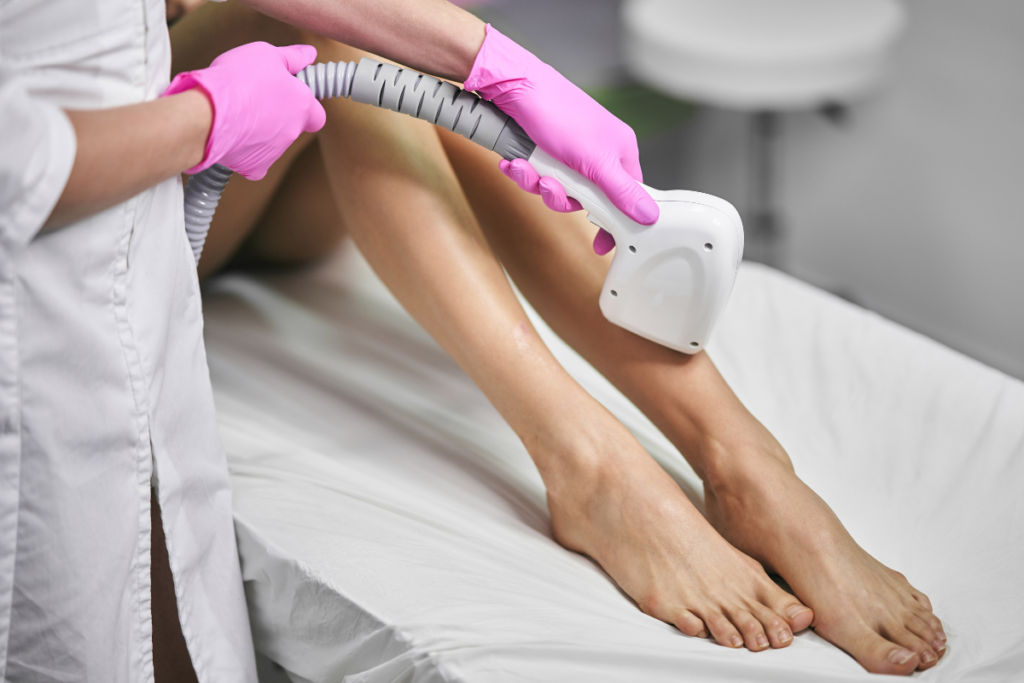
You finish your first appointment, notice some hairs shedding over the following days, and naturally wonder how many more visits it will take before you can stop thinking about shaving or waxing. When planning laser hair removal sessions, there is no single number that works for every person or every body area.
Hair colour and thickness, skin type, treatment area, hormones, the laser being used, and where each hair is in its growth cycle all influence the number of sessions you may need. Some areas respond relatively quickly, while facial or hormonally influenced hair can require a longer treatment plan and occasional maintenance.
How Many Laser Hair Removal Sessions Do You Usually Need?
Most people need a series of laser hair removal sessions rather than one or two treatments. Mayo Clinic states that most people require around four to eight treatments for best results, usually spaced several weeks apart. Your individual course may be shorter or longer depending on the treatment area, hair characteristics, hormonal influences, and response.
This is why a responsible laser plan should not promise that everyone’s hair will disappear after a fixed number of appointments. Your progress needs to be assessed throughout the course.
You can learn more about the clinic’s approach to laser hair reduction and how treatment is planned for different areas.
Why Can’t All the Hair Be Treated in One Session?
Laser works most effectively when hairs are actively growing, but all of your follicles are not in the same growth phase at the same time. Each session targets a proportion of suitable active hairs, while other follicles must progress through their natural cycle before they can be treated effectively at a later appointment.
Hair moves through different phases:
- Anagen: the active growth phase, when the hair remains connected to structures within the follicle.
- Catagen: a short transition phase when active growth stops.
- Telogen: the resting phase.
- Exogen: the stage when the old hair is released and sheds.
The American Academy of Dermatology explains that laser-treatment success depends partly on where the hair is in its growth cycle, along with factors such as the treatment area and the colour and coarseness of the hair.
That biology explains why completing your appointments at appropriate intervals matters more than trying to perform treatments as frequently as possible.
What Determines How Many Laser Sessions You Need?
The number of laser hair reduction sessions you need depends on several factors working together. Two people treating the same area may progress differently even when they are using the same technology.
| Factor | How It Can Affect Your Treatment Course |
|---|---|
| Treatment area | Different body areas have different hair-growth cycles and may respond at different speeds. |
| Hair colour | Darker hair generally provides a clearer melanin target for commonly used hair-removal lasers. |
| Hair thickness | Coarse, pigmented hair often responds differently from very fine hair. |
| Skin tone | Laser type and treatment parameters need to be selected carefully for safety and effectiveness. |
| Hormonal influences | Conditions that stimulate new facial or body hair can increase treatment and maintenance requirements. |
| Previous hair removal | Waxing or plucking removes the hair target from the follicle and can interfere with treatment planning. |
| Consistency | Long gaps or poorly timed appointments can make an organized treatment course less efficient. |
Do Different Body Areas Need Different Numbers of Sessions?
Yes. Facial hair, underarms, legs, bikini areas, chest, back, and other regions do not behave identically. Their growth cycles, hair density, thickness, hormonal sensitivity, and percentage of actively growing follicles differ, so treatment intervals and the total number of sessions should be adapted to the area.
For example, coarse underarm or bikini hair may show noticeable reduction relatively early in a treatment course. Facial hair can be more complicated because it may be strongly influenced by hormones, particularly in women with conditions that encourage excess hair growth.
Legs and larger body areas can also have slower growth cycles, which means appointments may be spaced differently from facial sessions.
This is why asking “how many laser sessions do I need?” is best answered after specifying both the treatment area and your individual hair pattern.
What Results Should You Expect After Each Session?
Laser hair removal results usually develop gradually rather than appearing immediately after treatment. Treated hairs may remain visible briefly before shedding. As the course progresses, many people notice slower regrowth, fewer hairs, finer remaining hairs, and longer periods between visible regrowth.
You should not judge the treatment by whether the skin looks completely hair-free immediately after the laser session.
A typical progression may look like this:
| Stage | What You May Notice |
|---|---|
| Early sessions | Shedding of treated hairs and slower return in some areas |
| Middle of the course | Patchier regrowth, reduced density, and longer intervals between shaving |
| Later sessions | Remaining hairs may become fewer or finer, with resistant areas becoming easier to identify |
| After the main course | Long-term reduction with maintenance considered when new or residual growth becomes noticeable |
Mayo Clinic’s laser hair removal guidance notes that multiple treatments are needed because hair growth and loss naturally occur in cycles.
Does Laser Hair Removal Mean Permanent Hair Removal?
Laser treatment is more accurately described as long-term or permanent hair reduction rather than a guarantee that every treated follicle will remain hair-free forever. Successful treatment can produce a substantial, stable reduction in regrowing hair, but some hair may eventually return and maintenance treatments may be needed.
The distinction matters because “permanent reduction” and “100% permanent removal” are not the same claim.
In FDA-cleared laser-device documentation, permanent hair reduction is defined as a long-term stable reduction in the number of hairs regrowing when assessed months after completing a treatment regimen.
When hair does return after successful treatment, it may be finer, lighter, or less dense than before, although individual responses vary.
Why Might You Need More Sessions Than Expected?
Needing additional sessions does not automatically mean the laser is failing. Several factors can extend a treatment course.
- Hormonal facial hair
- Polycystic ovary syndrome or other causes of excess hair growth
- Very fine or less pigmented remaining hair
- Large treatment areas
- Long gaps between appointments
- Changes in medications or hormones
- Individual hair-growth patterns
- New follicles becoming hormonally stimulated over time
If facial or body hair has increased suddenly, particularly alongside other hormonal symptoms, it can be worth discussing the change with a doctor rather than relying on laser treatment alone.
The Mayo Clinic’s hirsutism guidance explains that excessive coarse hair growth in women can sometimes be associated with underlying hormonal conditions.
Why Are Laser Sessions Spaced Apart?
Appointments are spaced to allow another group of hairs to enter a treatable growth phase. Performing sessions too close together does not force resting follicles to become responsive sooner. Appropriate intervals allow the treatment to follow the biology of hair growth instead of simply increasing the number of visits.
Intervals vary by area and response. Facial sessions may be scheduled differently from treatments for the legs, back, or other body regions. Your clinician should adjust the timing as hair growth slows through the course.
Common Mistakes That Can Affect Laser Hair Removal Results
- Waxing or plucking between sessions: These methods remove the hair from the follicle, eliminating the target the laser needs.
- Expecting complete clearance after one session: Only a proportion of hairs are in the optimal growth phase at any one time.
- Skipping appointments repeatedly: Inconsistent timing can make the course less organized.
- Tanning before treatment: Increased skin pigment can affect laser safety and parameter selection.
- Hiding medications or recent skin changes: Your clinician needs an accurate medical and treatment history.
- Using the same settings for everyone: Skin colour, hair thickness, treatment area, and response should influence parameters.
- Buying a fixed-session package and assuming it guarantees completion: Your actual response should determine when the main course is complete.
At-Home Devices vs Professional Laser Hair Reduction
Professional laser hair reduction allows trained clinicians to assess skin tone, hair characteristics, treatment area, and response before selecting appropriate technology and settings. At-home light-based devices generally operate differently or at lower energy levels and should not be assumed to provide the same treatment course or results as professional medical-grade systems.
The American Society for Dermatologic Surgery notes that laser and light treatment for unwanted hair commonly requires multiple sessions.
If you are considering professional treatment, you can explore Ballani Skin Aesthetics’ Laser & Skin Treatments and dedicated Laser Hair Reduction page.
Frequently Asked Questions
How many laser hair removal sessions do I really need?
Many people require approximately four to eight initial treatments, but there is no guaranteed number for everyone. The treatment area, hair colour and thickness, growth cycle, skin tone, hormones, technology, and individual response all influence the final course. Some people also need additional or maintenance sessions after the initial series.
Why do I still have hair after six laser sessions?
Remaining hair after six sessions can be normal. Some follicles may not have been in an optimal growth phase during earlier treatments, while fine or hormonally influenced hair can be more resistant. Your clinician should assess whether the remaining hair is becoming finer and sparser and whether additional sessions are appropriate.
How long should I wait between laser hair removal sessions?
There is no universal interval for every treatment area. Sessions are usually spaced several weeks apart so another group of hairs can reach an appropriate growth phase. Facial and body areas may require different intervals, and spacing often changes as regrowth slows. Follow the schedule recommended for your specific treatment area.
Are laser hair removal results permanent?
Laser is best understood as producing long-term or permanent hair reduction rather than guaranteeing that every hair will disappear forever. A successful course can substantially reduce regrowth, but some follicles may produce hair again over time. Hormonal changes can also stimulate new growth, making occasional maintenance treatments useful for some people.
Why does facial hair need more laser sessions?
Facial hair can be strongly influenced by hormones, particularly in women with hormonally driven excess hair growth. New hairs may continue developing even when previously treated follicles respond well. Facial hair can also become finer as treatment progresses, making later sessions different from the initial treatment of coarse, dark hairs.
Do I need maintenance sessions after completing laser hair reduction?
Some people benefit from occasional maintenance when noticeable regrowth develops after the initial course. How often this is needed varies widely. Treatment area, hormonal changes, remaining hair characteristics, and individual biology all play a role. Maintenance should be based on actual regrowth rather than automatically scheduled at unnecessarily frequent intervals.
If you would like to explore more patient experiences and treatment journeys, you can also read more inspiring stories.
Conclusion: Your Session Count Should Follow Your Hair
There is no magic number of laser hair removal sessions that guarantees the same result for everyone. Four to eight treatments is a commonly cited general range, but your real treatment course depends on the area, hair thickness and colour, growth cycle, skin type, hormonal influences, and how your hair responds as the sessions progress.
The goal is permanent hair reduction, not an unrealistic promise that every follicle will disappear forever. A well-planned course should therefore be adjusted according to your actual regrowth rather than forcing every patient into an identical package.
Ready to Plan Your Laser Hair Reduction?
Book a laser assessment: If you want to understand how many sessions your face or body area may need, schedule a consultation so your skin type, hair pattern, treatment area, and suitability can be assessed before beginning.
Explore the treatment: Learn more about Laser Hair Reduction at Ballani Skin Aesthetics, including the clinic’s approach to personalized treatment planning.