
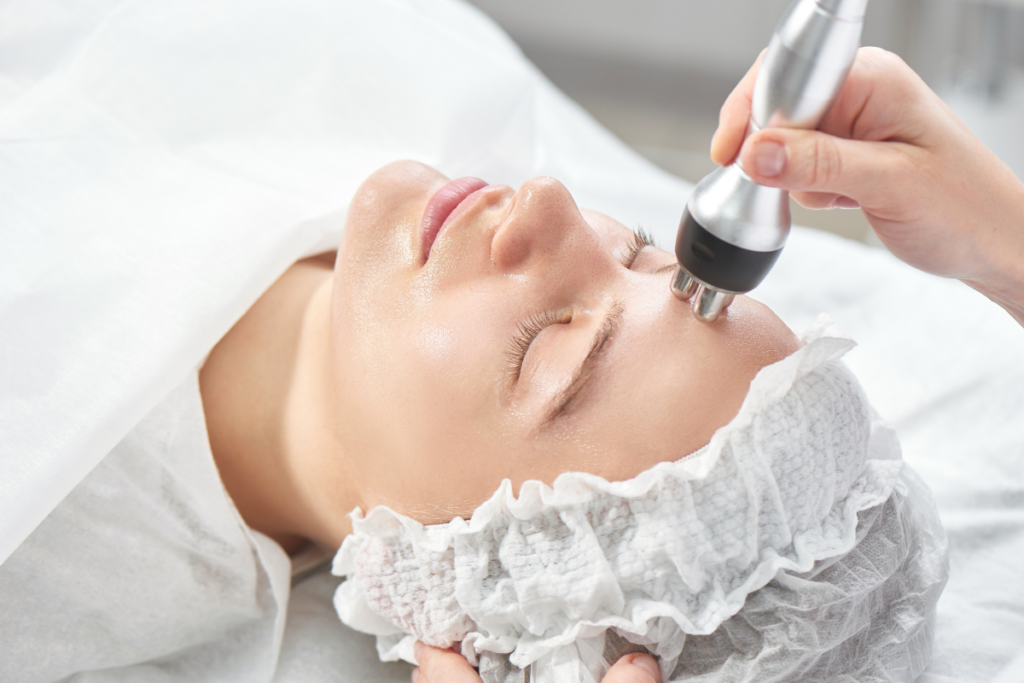
You notice the jawline looking softer, the skin around your cheeks feeling less firm, or mild looseness developing under the chin. You want improvement, but you are not ready for surgery. During your research, two treatments appear repeatedly: HIFU and radiofrequency. Understanding HIFU vs RF skin tightening can make the choice much clearer because both use heat to stimulate tissue remodeling, but they deliver that energy in very different ways.
HIFU uses focused ultrasound energy at selected tissue depths, while RF uses radiofrequency electrical energy to create controlled heating within the skin and underlying tissue. Neither treatment is automatically better. The right option depends on where your laxity is occurring, how much tightening you need, your skin characteristics, treatment goals, comfort preferences, and the technology being used.
HIFU vs RF Skin Tightening: The Simple Difference
HIFU concentrates ultrasound energy into precise focal points beneath the skin, while RF skin tightening creates controlled heat using radiofrequency energy across targeted tissue. HIFU is often selected when deeper structural tightening and lifting are priorities, whereas non-invasive RF can be useful when broader dermal heating, firmness, and skin quality are important.
The U.S. Food and Drug Administration describes focused ultrasound systems for aesthetic use as devices that apply focused ultrasound energy to produce changes in physical appearance.
Both approaches can form part of a personalized skin tightening treatment, but the device, energy delivery, treatment depth, and clinical goal need to be considered rather than comparing the names alone.
How Does HIFU Treatment Work?
HIFU, or high-intensity focused ultrasound, delivers concentrated ultrasound energy to predetermined depths beneath the skin. The focused energy creates small zones of controlled thermal injury while largely preserving surrounding tissue. The subsequent healing response stimulates collagen remodeling, which can gradually improve firmness and laxity.
Unlike a resurfacing laser, HIFU does not need to remove the outer skin surface to reach deeper structures. Different transducers can be designed to focus energy at different depths depending on the device and treatment area.
Clinical research has evaluated HIFU for areas including the lower face, jawline, submental region, neck, and areas around the eyes. A prospective clinical trial of HIFU reported improvements in measures of wrinkles and elasticity after treatment of periorbital, perioral, and neck areas.
HIFU May Be Considered For
- Mild to moderate facial skin laxity
- Softening around the jawline
- Mild looseness beneath the chin
- Neck laxity in suitable patients
- Patients seeking a non-surgical lifting and tightening approach
How Does RF Skin Tightening Work?
RF skin tightening uses radiofrequency electrical energy to generate controlled heat within targeted tissue. Heating can cause immediate collagen contraction and, more importantly, stimulate longer-term collagen remodeling. The way energy is distributed depends heavily on whether the device uses monopolar, bipolar, multipolar, or another RF configuration.
RF does not rely on pigment as its main target, which distinguishes it from many light-based treatments. Clinical studies have demonstrated measurable improvements in skin laxity and facial rejuvenation with appropriately selected RF systems.
A clinical study of bipolar radiofrequency for facial skin tightening reported improvements in skin tightening with a favourable safety profile in the studied participants.
Not All RF Treatments Are the Same
It is important to distinguish non-invasive RF skin tightening from RF microneedling. Non-invasive RF delivers energy through the skin surface without needles. RF microneedling uses small needles to place radiofrequency energy at selected depths within the skin. They are different procedures with different treatment goals, recovery profiles, and risks.
HIFU vs RF: Side-by-Side Comparison
| Feature | HIFU | Non-Invasive RF |
|---|---|---|
| Energy | Focused ultrasound | Radiofrequency electrical energy |
| Energy pattern | Concentrated focal points at selected depths | Controlled heating across targeted tissue |
| Main goal | Deeper tightening and lifting | Firming, collagen remodeling, and improvement in laxity |
| Skin surface | Generally remains intact | Remains intact with non-invasive RF |
| Results | Develop gradually as collagen remodels | Develop progressively with collagen remodeling |
| Treatment course | Depends on device, laxity, and clinical plan | May involve one or multiple treatments depending on the RF system |
| Best choice | Depends on anatomy and treatment goal | Depends on anatomy and treatment goal |
Is HIFU Better Than RF for Face Tightening?
HIFU is not universally better than RF, and RF is not universally better than HIFU. HIFU may be preferred when treatment is intended to focus energy at deeper, predetermined tissue levels, while RF may be selected for controlled volumetric heating and improvement in firmness. Your anatomy and degree of laxity should determine the treatment.
This is supported by direct comparative research. In a randomized split-face clinical trial comparing microfocused ultrasound with monopolar RF, both treatments significantly improved face and neck laxity, with no statistically significant difference between them in investigator-assessed laxity, patient satisfaction, or adverse events.
That finding highlights why asking which machine is “stronger” is often less helpful than identifying what your face actually needs.
Which Treatment Goes Deeper?
HIFU is designed to focus ultrasound energy at specific predetermined depths, while RF depth and heating pattern vary according to the type of RF technology, applicator, power, tissue resistance, and treatment settings. It is therefore too simplistic to assign one universal depth to all HIFU devices or all radiofrequency systems.
The anatomy of the treatment area also matters. Loose skin at the jawline may need a different strategy from fine laxity around the cheeks or changes in overall skin quality.
A proper skin tightening assessment should examine facial structure, fat distribution, skin thickness, laxity, and the areas creating the concern before selecting technology.
What Results Can You Expect?
Neither HIFU nor RF should be expected to reproduce the result of a surgical facelift. These treatments are better suited to people seeking gradual, non-surgical improvement in mild to moderate laxity. Collagen remodeling develops over time, so the final result should not be judged immediately after the appointment.
| Concern | Treatment Consideration |
|---|---|
| Mild jawline softness | HIFU or RF may be considered depending on anatomy |
| Early facial laxity | Either technology may form part of a non-surgical plan |
| General skin firmness | RF may be useful when broader dermal heating is desired |
| Deeper lifting objective | Focused ultrasound may be considered when suitable |
| Significant loose skin | Energy-based treatment may have limited ability to reproduce surgical correction |
Research into HIFU for facial skin tightening has demonstrated measurable improvement after treatment, but outcomes vary with technology, treatment parameters, anatomy, and baseline laxity.
Can HIFU and RF Be Combined?
Yes, selected patients may receive both technologies when they address different aspects of facial laxity, but combination treatment should be planned rather than automatically performed. Energy level, anatomical area, treatment sequence, tissue condition, and intervals between procedures all need to be considered to avoid unnecessary treatment.
A 2025 clinical study examining monopolar RF and HIFU treatment sequences found improvement with both sequences and reported collagen-related histological changes. Research into combination strategies is continuing.
For patients concerned with both laxity and overall skin quality, other skin rejuvenation treatments may also be considered rather than expecting one device to address every sign of ageing.
Who May Not Need Either Treatment?
A non-surgical tightening device is not automatically the answer whenever the face appears heavier or less defined. Sometimes what looks like loose skin is influenced more by facial fat distribution, volume loss, muscle activity, bone structure, or a combination of ageing changes.
More advanced laxity can also exceed what energy-based treatment can realistically correct. Setting that expectation before treatment helps avoid repeated procedures that cannot achieve the degree of lifting someone wants.
Common Mistakes When Choosing HIFU or RF
- Choosing by machine name alone: Technology and treatment parameters matter more than marketing terminology.
- Assuming HIFU is automatically stronger: Treatment suitability depends on anatomy, device, settings, and clinical objective.
- Treating every ageing concern as loose skin: Volume loss, pigmentation, wrinkles, and muscle activity require different approaches.
- Expecting facelift-level results: Non-surgical treatments provide a different degree of correction from surgery.
- Repeating energy treatments unnecessarily: More treatment does not automatically mean more tightening.
- Ignoring facial anatomy: Energy needs to be delivered with an understanding of underlying structures.
- Comparing results immediately: Collagen remodeling develops gradually after treatment.
DIY Devices vs Professional Skin Tightening
Professional HIFU and medical aesthetic RF procedures should be selected and performed with appropriate knowledge of facial anatomy, energy delivery, and device-specific settings. These treatments deliberately heat tissue, so incorrect placement or excessive energy can cause complications rather than better tightening. A professional assessment is therefore part of treatment safety, not simply an optional consultation.
The FDA classifies focused ultrasound aesthetic systems as medical devices and identifies potential risks that manufacturers must address, including thermal injury and unintended tissue effects. Device selection and correct use therefore matter.
Frequently Asked Questions
Which is better for loose skin, HIFU or RF?
Neither is better for everyone. HIFU delivers focused ultrasound to predetermined tissue depths and may suit selected deeper tightening goals. RF creates controlled tissue heating and can improve firmness and laxity. Your skin thickness, facial anatomy, degree of looseness, treatment area, device being used, and desired result should determine the choice.
Is HIFU more powerful than RF skin tightening?
Calling one technology more powerful can be misleading because they deliver energy differently. HIFU concentrates ultrasound into focal treatment points, while RF generates controlled heating according to the RF system and applicator. Clinical effectiveness depends on energy settings, treatment depth, device design, anatomy, and patient selection rather than the technology name alone.
How long does HIFU or RF skin tightening take to show results?
Some immediate firmness may be noticed after energy-based treatment, but meaningful tightening develops gradually as collagen remodels. Improvement is commonly assessed over the following weeks and months rather than immediately after treatment. The timeline varies according to the technology, treatment intensity, age, baseline laxity, and individual biological response.
Can HIFU and RF replace a facelift?
No. HIFU and RF are non-surgical treatments intended for selected degrees of skin laxity and do not reproduce the structural correction possible with surgery. They are most appropriate when the goal is gradual tightening without surgery. Significant loose skin or substantial tissue descent may require a different treatment discussion.
Can HIFU and RF be used together?
They can be combined in selected patients when each technology addresses a useful treatment target. Combination treatment should be planned around facial anatomy, energy levels, device characteristics, and treatment timing. Using both simply because they are available does not guarantee a better result and may expose tissue to unnecessary energy.
Is RF skin tightening the same as RF microneedling?
No. Non-invasive RF heats targeted tissue through an applicator placed on the skin surface without needles. RF microneedling inserts fine needles into the skin and delivers radiofrequency energy at selected depths. They have different treatment profiles, recovery expectations, settings, and potential risks, so the terms should not be used interchangeably.
If you would like to explore more patient experiences and treatment journeys, you can also read more inspiring stories.
Conclusion: Choose the Treatment Around Your Skin
When comparing HIFU vs RF skin tightening, the biggest difference is how energy reaches the tissue. HIFU creates focused zones of ultrasound energy at selected depths, while radiofrequency creates controlled heating according to the type of RF system being used. Both can stimulate collagen remodeling and improve suitable cases of facial laxity.
The best non-surgical skin tightening plan should therefore begin with your anatomy rather than a machine name. Mild jawline looseness, changes in skin firmness, facial structure, skin thickness, and the degree of laxity all influence whether HIFU, RF, another anti-ageing treatment, or a combination is appropriate.
Ready to Plan Your Skin Tightening Treatment?
Book a facial assessment: If you are deciding between HIFU and RF for loose skin or face tightening, schedule a consultation so your facial anatomy, skin laxity, and treatment goals can be assessed before selecting a technology.
Explore your options: Learn more about Skin Tightening at Ballani Skin Aesthetics and how non-surgical treatments can be personalized around your individual concerns.