
You look in the mirror and see the same uneven patches, acne marks, or brown spots that your skincare routine has only partly improved. A chemical peel for pigmentation can help selected types of discoloration, but choosing a peel is not as simple as picking the strongest acid or the treatment that promises the fastest brightening.
Pigmentation has different causes and can sit at different depths within the skin. Melasma behaves differently from post-acne dark spots, and sun-related pigmentation may need a different approach again. Your skin tone, sensitivity, current skincare, sun exposure, and tendency to develop pigmentation after irritation all matter before a peel touches your face.
How Does a Chemical Peel for Pigmentation Work?
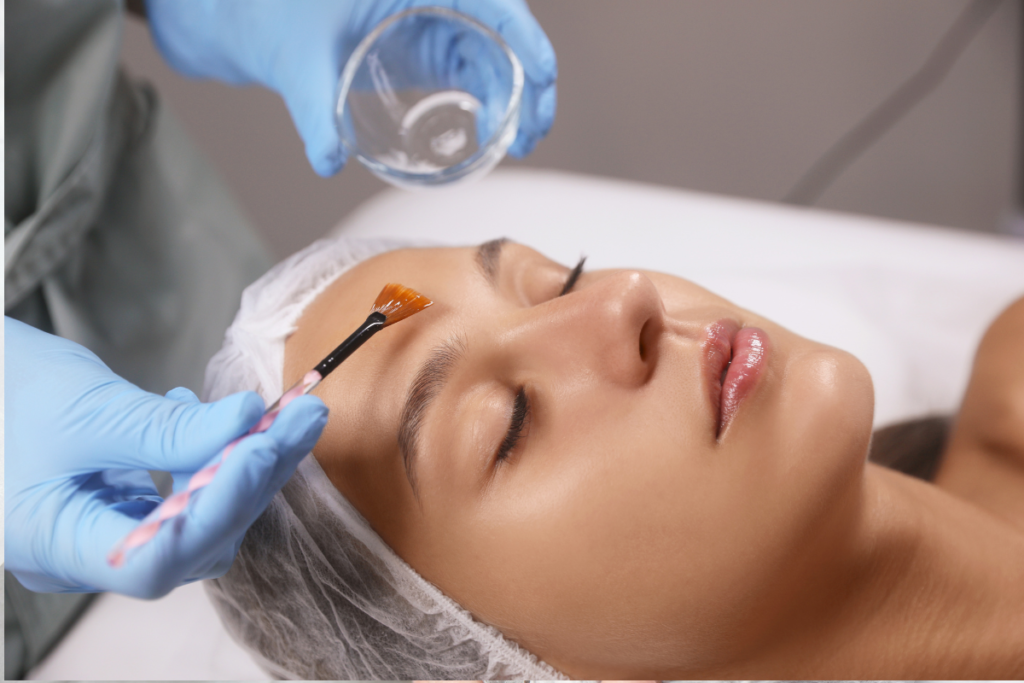
A chemical peel for pigmentation applies a controlled chemical solution to the skin to remove or loosen superficial damaged cells and encourage renewal. Superficial peels can help reduce excess epidermal pigment and improve uneven tone over time. The acid, concentration, application time, and treatment depth should be selected according to your pigmentation and skin type.
The American Academy of Dermatology includes discoloration among the concerns dermatologists may treat with chemical peels.
That does not mean every brown patch should immediately be peeled. Before treatment, we first need to understand what is producing the colour.
What Type of Pigmentation Are You Treating?
Dark spots can develop from melasma, acne-related inflammation, sun exposure, irritation, or other pigment disorders. Because these conditions behave differently, identifying the cause before treatment can reduce unnecessary irritation and help determine whether a peel should be used alone, combined with skincare, or avoided until another problem is controlled.
| Pigmentation Concern | Typical Pattern | Role of a Chemical Peel |
|---|---|---|
| Post-acne pigmentation | Flat brown marks where inflammatory acne previously occurred | Superficial peels may help selected patients while active acne is also controlled |
| Melasma | Symmetrical brown or grey-brown facial patches | Peels may be used cautiously as part of a broader maintenance plan |
| Sun-related pigmentation | Uneven tone or defined brown spots on sun-exposed skin | Selected superficial peels can help superficial pigment |
| Post-inflammatory pigmentation | Darkening after irritation, eczema, injury, or another inflammatory problem | The underlying inflammation should be controlled before aggressive treatment |
| Deep or unclear pigmentation | Persistent darker, grey-brown, or unusual patches | Diagnosis should come before repeated peeling |
If you are unsure what type of pigmentation you have, the Ballani Skin Aesthetics Pigmentation page explains how treatment planning begins with understanding the concern rather than treating all dark patches alike.
Which Chemical Peels Are Used for Dark Spots?
Superficial peeling agents such as glycolic acid and salicylic acid are commonly used in dermatology for selected pigmentation concerns. The right peel depends on skin type, pigmentation pattern, acne activity, sensitivity, and previous treatments. A higher percentage or deeper peel does not automatically produce a safer or better result.
Glycolic Acid Peels
Glycolic acid is an alpha-hydroxy acid, or AHA, and has been widely studied for hyperpigmentation and melasma. A 2024 systematic review of chemical peels for melasma included glycolic acid among the studied peeling agents and found chemical peels can be useful in melasma management.
A glycolic peel for pigmentation is usually performed at a controlled strength and contact time. Treatment is often staged rather than attempting dramatic peeling in a single visit.
Salicylic Acid Peels
Salicylic acid is a beta-hydroxy acid, or BHA. It can be useful when pigmentation appears alongside oily or acne-prone skin because it is also used in acne treatment. As with glycolic acid, suitability depends on the individual rather than the ingredient name alone.
Chemical Peel for Melasma: Why Extra Caution Matters
A chemical peel for melasma can reduce superficial excess pigment in selected patients, but melasma is a recurrent condition and peeling alone does not remove its underlying tendency. Sunlight, visible light, hormonal influences, and skin irritation can reactivate pigmentation, which is why photoprotection and maintenance treatment remain central to long-term management.
The American Academy of Dermatology’s melasma guidance includes chemical peels among procedures dermatologists may add to a treatment plan when appropriate.
However, caution matters. DermNet notes that chemical peels can help melasma but can also worsen it or cause post-inflammatory hyperpigmentation.
This is why repeatedly peeling melasma whenever it darkens is rarely a complete strategy. Your daily skincare, sunscreen, trigger control, and maintenance plan may matter just as much as the procedure itself.
Can a Chemical Peel Make Pigmentation Worse?
Yes. A chemical peel can cause post-inflammatory hyperpigmentation if the skin becomes excessively irritated or injured. This risk is particularly important in brown and darker skin tones and in people who already develop dark marks easily after inflammation. Appropriate peel depth, skin preparation, aftercare, and sun protection help reduce this risk.
Mayo Clinic’s chemical peel guidance lists both hyperpigmentation and hypopigmentation among possible complications and notes that colour changes can be a greater concern in brown and Black skin.
So if a peel leaves your skin extremely inflamed, stronger does not necessarily mean more effective. With pigmentation-prone skin, unnecessary inflammation can work against the result you wanted.
Superficial vs Deeper Peels: What Changes?
| Peel Depth | General Effect | Recovery | Pigmentation Consideration |
|---|---|---|---|
| Superficial | Targets the outer skin layers | Usually relatively limited | Commonly considered for selected superficial pigmentation concerns |
| Medium-depth | Creates a deeper controlled injury | More visible peeling and recovery | Requires more careful patient selection and aftercare |
| Deep | Produces substantially deeper resurfacing | Significantly greater recovery | Greater potential for pigment complications and not routinely chosen simply for facial pigmentation |
Your treatment should therefore be matched to your skin rather than escalating peel strength just because previous pigmentation has been stubborn.
You can explore the clinic’s professional Chemical Peels & Facials page for more information about how these treatments fit into individualized skin care.
What Should You Do Before a Chemical Peel?
Preparation begins with making sure your skin is suitable for treatment. Your dermatologist should know about active acne, eczema, cold sores, recent procedures, current skincare, medications, previous reactions, sun exposure, and your history of pigmentation after irritation before deciding on the peel and its strength.
You may also be advised to adjust certain active skincare ingredients before treatment. Exact instructions vary, so avoid creating your own pre-peel routine from social media or another person’s treatment plan.
What Should You Expect After the Peel?
The word “peel” makes many people imagine sheets of skin coming away. Superficial peels can be much subtler. Depending on the agent and strength, you may experience temporary redness, tightness, dryness, mild flaking, or visible peeling.
Aftercare commonly focuses on:
- Gentle cleansing
- Appropriate moisturising
- Daily broad-spectrum sun protection
- Avoiding picking or manually peeling flaking skin
- Temporarily avoiding irritating active products when advised
- Following the treatment-specific instructions given by your dermatologist
The AAD’s guidance on dark spots emphasizes identifying the cause of pigmentation and protecting the skin from sunlight as part of managing discoloration.
Common Mistakes with Chemical Peels for Pigmentation
- Choosing the strongest peel available: Deeper injury can increase downtime and pigment complications.
- Peeling without identifying the pigmentation: Melasma and post-acne marks do not behave identically.
- Ignoring active irritation: An already compromised skin barrier may respond poorly to additional injury.
- Picking peeling skin: This can increase inflammation and the risk of dark marks.
- Skipping sunscreen: UV exposure can stimulate pigmentation and undermine treatment results.
- Expecting one peel to clear long-standing pigmentation: Many concerns need staged treatment and maintenance.
- Using multiple acids at home immediately afterward: Over-treating can turn a controlled procedure into unnecessary irritation.
At-Home Peel vs Professional Chemical Peel
At-home exfoliating acids and professionally performed chemical peels are not interchangeable. Professional treatment allows the clinician to choose concentration, peel type, contact time, treatment endpoint, and aftercare according to your skin. Strong home peeling products used incorrectly can cause burns, irritation, scarring, or new pigmentation instead of improving dark spots.
If your pigmentation is persistent, recurring, or accompanied by sensitivity, professional assessment is usually more useful than continuing to increase the strength of home acids.
Frequently Asked Questions
Is a chemical peel good for pigmentation?
A chemical peel can improve selected superficial pigmentation by removing pigmented surface cells and encouraging controlled skin renewal. Results depend on the cause and depth of pigmentation, skin type, peel used, and aftercare. Melasma and recurrent pigmentation usually require skincare and photoprotection alongside procedures rather than relying on peels alone.
Which chemical peel is best for dark spots?
There is no single best peel for every dark spot. Glycolic acid and salicylic acid are commonly used superficial peeling agents, but the choice depends on whether you have melasma, post-acne pigmentation, oily skin, sensitivity, or another condition. The safest effective peel is one selected for your individual skin.
Can a glycolic peel help pigmentation?
Yes. Glycolic acid peels have been studied for melasma, post-inflammatory hyperpigmentation, and other superficial pigmentation concerns. The concentration and treatment schedule should be chosen carefully because more aggressive peeling does not automatically mean better results. Glycolic peels are often used as part of a broader pigmentation-management plan.
Can chemical peels permanently remove melasma?
No. A chemical peel may lighten superficial melasma, but it cannot guarantee permanent removal because melasma has an ongoing tendency to recur. Sunlight, visible light, hormones, and other triggers can stimulate pigmentation again. Long-term management typically includes photoprotection, appropriate topical treatment, and maintenance even after visible improvement.
Can a chemical peel make dark spots darker?
Yes. Excessive inflammation after a peel can cause post-inflammatory hyperpigmentation, particularly in pigmentation-prone and darker skin tones. Correct peel selection, appropriate depth, good aftercare, and sun protection help reduce the risk. Increasing peel strength without considering your skin type can make pigmentation more difficult rather than easier to manage.
How many chemical peels do I need for pigmentation?
There is no fixed number for everyone. Superficial pigmentation treatments are often performed as a series, but the number and interval depend on the condition, peel, skin response, and other treatments being used. Progress should be assessed throughout the course rather than purchasing a predetermined number and assuming everyone needs the same plan.
If you would like to explore more patient experiences and treatment journeys, you can also read more inspiring stories.
Conclusion: Treat the Pigmentation, Not Just the Surface
A chemical peel for pigmentation can be valuable when the right peel is matched to the right concern. Glycolic, salicylic, and other superficial peels can help selected dark spots and uneven tone, while melasma requires greater caution and usually needs an ongoing treatment and maintenance strategy.
The aim should not be to make your skin peel as much as possible. It should be to create controlled improvement without triggering unnecessary inflammation. Once we understand the type of pigmentation, skin tone, sensitivity, and previous treatments, a pigmentation treatment plan can be built around what your skin actually needs.
Considering a Chemical Peel?
Book a pigmentation assessment: If you have melasma, dark spots, or recurring facial pigmentation, schedule a consultation so your skin and pigmentation can be assessed before choosing a peel.
Explore professional peel options: Learn more about Chemical Peels & Facials at Ballani Skin Aesthetics and how treatment can be personalized around your skin type and concerns.