Finding more hair than usual in your brush or shower drain can be worrying. Many people immediately assume they’re experiencing permanent hair loss, but that’s not always the case. Understanding the difference between hair shedding vs hair loss is essential because each condition has different causes, treatment approaches, and expectations. While temporary hair shedding often resolves once the underlying trigger is addressed, true hair loss may require targeted medical treatment to prevent further thinning.
In this guide, we’ll explain how to tell the difference, what causes each condition, when you should seek professional advice, and what your hair may need to recover and stay healthy.
Hair Shedding vs Hair Loss: What’s the Difference?
Hair shedding is the temporary loss of hair that is part of the natural hair growth cycle, while hair loss occurs when hair stops growing back normally due to damage, genetics, hormones, or medical conditions. Identifying which one you’re experiencing helps determine the most effective treatment.
Everyone loses hair daily. According to the American Academy of Dermatology, losing between 50 and 100 hairs per day is considered normal. Problems arise when shedding becomes excessive or when lost hair doesn’t regrow as expected.
What Is Hair Shedding?
Hair shedding is usually a temporary condition known as telogen effluvium. During this phase, a larger number of hair follicles enter the resting stage of the hair growth cycle, causing increased hair fall several weeks or months after a trigger.
Common Causes of Hair Shedding
- High fever or illness
- Emotional or physical stress
- Pregnancy and childbirth
- Rapid weight loss
- Major surgery
- Nutritional deficiencies such as iron, vitamin D, or protein deficiency
- Certain medications
Many people notice increased hair fall about two to three months after the triggering event, which can make it difficult to identify the cause.
What Is Hair Loss?
Hair loss refers to a condition in which hair follicles gradually shrink, become damaged, or stop producing healthy hair. Unlike temporary shedding, hair loss often progresses over time if left untreated.
The most common form is androgenetic alopecia, also known as male or female pattern hair loss. Other causes include autoimmune conditions, scarring disorders, hormonal imbalances, and certain medical illnesses.
The U.S. National Library of Medicine provides an overview of common hair loss conditions and their causes.
Hair Shedding vs Hair Loss: Key Differences
| Feature | Hair Shedding | Hair Loss |
|---|---|---|
| Duration | Usually temporary | Often progressive |
| Hair Regrowth | Typically returns naturally | May require treatment |
| Hair Density | Overall volume decreases temporarily | Noticeable thinning or bald patches |
| Common Trigger | Stress, illness, childbirth | Genetics, hormones, autoimmune disease |
| Treatment | Address underlying cause | Medical diagnosis and targeted therapy |
Signs You’re Experiencing Hair Shedding
If you’re experiencing temporary shedding, you may notice:
- Large amounts of hair in the shower or on your pillow.
- Hair falling evenly across the scalp.
- No obvious bald patches.
- Hairline remains unchanged.
- Hair gradually begins improving within several months after the trigger resolves.
Signs It May Be Hair Loss
Persistent hair loss often presents differently. Common warning signs include:
- Widening part line.
- Receding hairline.
- Visible scalp.
- Thinning concentrated in specific areas.
- Hair becoming progressively finer over time.
- Family history of pattern baldness.
Why Getting the Right Diagnosis Matters
Hair shedding and hair loss may appear similar, but treating the wrong condition can delay improvement and allow underlying problems to worsen.
A dermatologist will typically evaluate:
- Your medical history.
- Recent illnesses or stressful events.
- Diet and nutritional status.
- Hormonal health.
- Scalp condition.
- Family history.
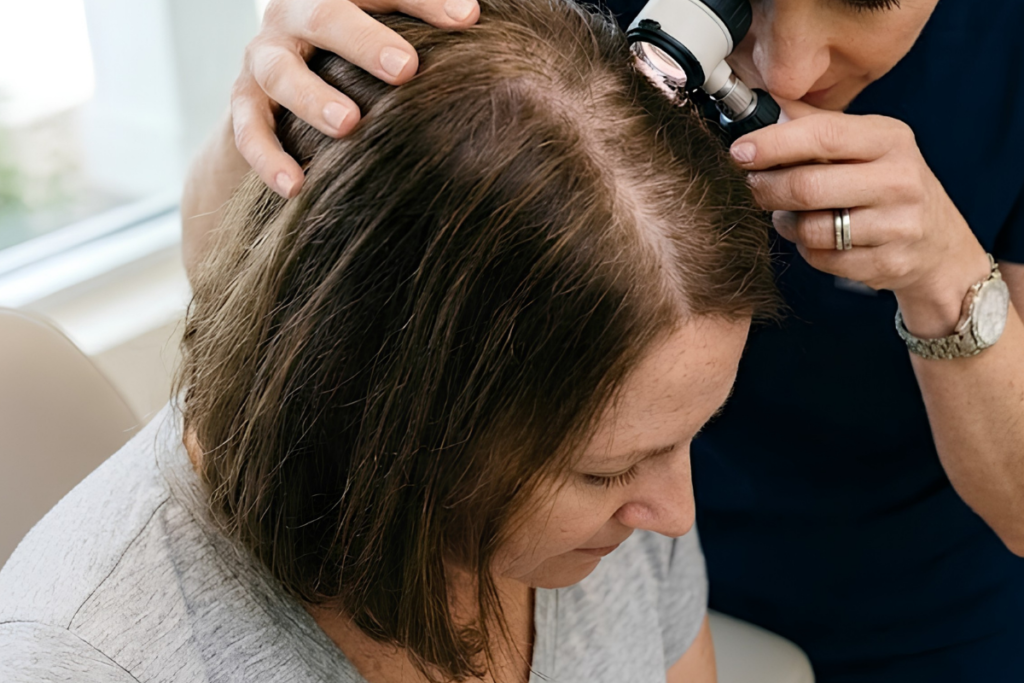
- Hair pull test or trichoscopy when appropriate.
The American Academy of Dermatology recommends seeking professional evaluation if hair loss continues for several months or is accompanied by itching, pain, or bald patches.
What Treatments May Help?
For Temporary Hair Shedding
Treatment focuses on correcting the underlying trigger while supporting healthy hair regrowth.
- Nutritional optimization.
- Managing stress.
- Treating medical conditions.
- Gentle hair care.
- Dermatologist-recommended supplements when appropriate.
For Hair Loss
Treatment depends on the diagnosis and may include:
- Prescription topical medications.
- Oral medications for suitable candidates.
- Platelet-rich plasma (PRP) therapy.
- Low-level laser therapy.
- Hair growth procedures.
- Personalized long-term maintenance plans.
The DermNet resource outlines various types of alopecia and evidence-based treatment approaches.
DIY vs Professional Treatment
DIY Approaches
Many over-the-counter shampoos and hair oils promise dramatic regrowth, but few address the actual cause of hair thinning. Delaying diagnosis may reduce treatment effectiveness for certain conditions.
Professional Care
A dermatologist can identify whether you’re experiencing temporary shedding, genetic hair loss, hormonal imbalance, or another scalp disorder. Early treatment often improves long-term outcomes.
Common Mistakes That Can Worsen Hair Loss
- Ignoring persistent hair thinning.
- Using harsh chemical treatments excessively.
- Following unverified internet remedies.
- Crash dieting.
- Skipping medical evaluation despite worsening symptoms.
- Expecting instant results from treatment.
Healthy Habits That Support Hair Growth
- Eat a balanced diet rich in protein, iron, and vitamins.
- Manage chronic stress.
- Protect your scalp from excessive heat and harsh chemicals.
- Use gentle hair care products.
- Follow your dermatologist’s treatment plan consistently.
- Schedule follow-up appointments to monitor progress.
The National Institute of Arthritis and Musculoskeletal and Skin Diseases (NIAMS) emphasizes that identifying the underlying cause is essential for successful treatment.
Frequently Asked Questions
How do I know if I’m experiencing hair shedding or hair loss?
Hair shedding usually causes diffuse hair fall across the scalp and often improves within months. Hair loss typically causes progressive thinning, a widening part, or bald patches that persist without treatment.
Can stress cause hair shedding?
Yes. Significant emotional or physical stress can trigger telogen effluvium, leading to temporary hair shedding several weeks after the stressful event.
Does hair grow back after shedding?
In most cases, yes. Once the underlying cause is addressed, healthy hair growth gradually resumes over the following months.
Is hair shedding normal every day?
Yes. Losing between 50 and 100 hairs daily is considered a normal part of the hair growth cycle.
When should I see a dermatologist?
You should seek professional evaluation if hair thinning continues for several months, worsens over time, or is accompanied by scalp symptoms or bald patches.
Want to read inspiring patient journeys and real treatment experiences? Visit our Inspiring Stories page.
Conclusion
Understanding hair shedding vs hair loss helps you take the right steps before the problem progresses. While temporary shedding often improves once the underlying trigger is resolved, persistent hair loss usually requires professional diagnosis and personalized treatment. Early evaluation can make a significant difference in protecting your hair and achieving better long-term results.
Ready to Take the Next Step?
If you’re noticing increased hair fall or visible thinning, schedule a consultation with an experienced dermatologist for a comprehensive scalp and hair assessment tailored to your individual needs.
Have questions about your symptoms or treatment options? Contact our team today to learn how personalized hair restoration strategies can help you achieve healthier, stronger hair.