
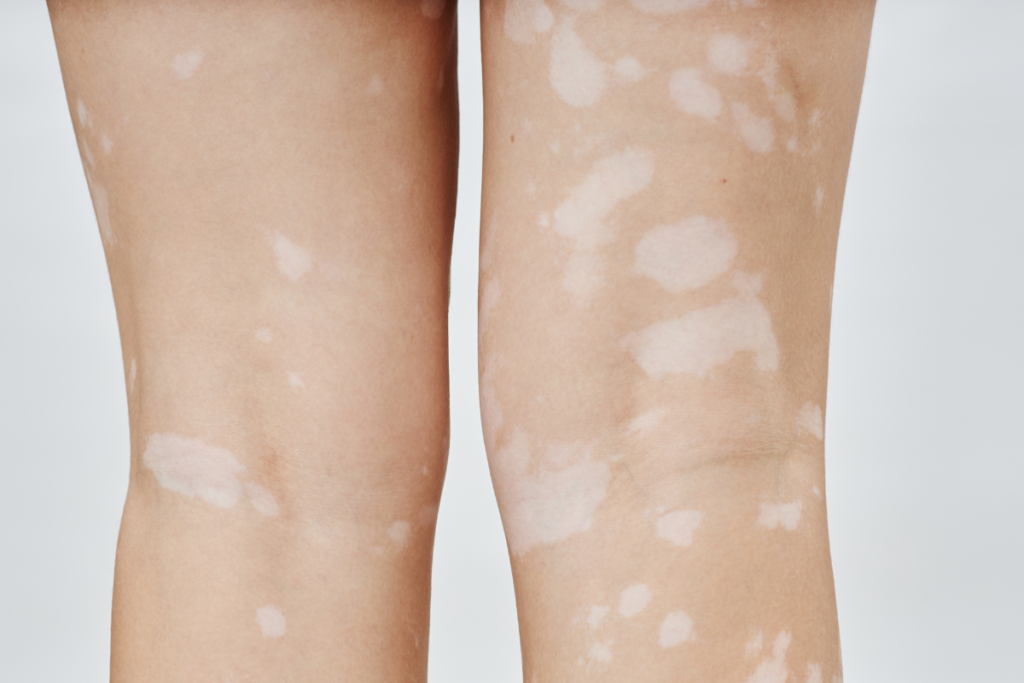
You notice a pale spot on your face, arm, neck, or chest and immediately wonder whether it could be vitiligo. That reaction is understandable, but white patches on skin do not always mean vitiligo. Several conditions can reduce skin colour, and some are temporary, inflammatory, or related to a superficial yeast infection.
The colour, borders, texture, location, symptoms, and way a patch changes over time can all provide useful clues. A completely smooth, sharply defined white patch behaves differently from a mildly scaly pale patch after summer or a lighter area left behind after eczema. Understanding those differences can help you know when simple treatment may be enough and when a dermatologist should examine the skin.
Do White Patches on Skin Always Mean Vitiligo?
No. White patches on skin can result from vitiligo, pityriasis versicolor, pityriasis alba, post-inflammatory hypopigmentation, sun-related pigment changes, and several other conditions. Vitiligo causes loss of pigment-producing cells, while other conditions may temporarily reduce melanin production without completely destroying those cells. Correct diagnosis matters because the treatments are very different.
The American Academy of Dermatology specifically notes that loss of skin colour can have several causes, including vitiligo, tinea versicolor, and previous skin injury.
So rather than asking only, “Is this vitiligo?”, it is often more useful to ask what type of pigment loss is actually occurring.
Hypopigmentation vs Depigmentation: What Is the Difference?
Hypopigmentation means the skin contains less pigment than the surrounding area, while depigmentation means pigment has been lost more completely. A pale patch is therefore not necessarily the same as a truly white patch. This distinction can help dermatologists narrow down the possible cause.
DermNet describes hypopigmentation as reduced melanin and depigmentation as a more complete loss of epidermal melanin.
| Possible Cause | Typical Appearance | Other Clues |
|---|---|---|
| Vitiligo | Clearly lighter or completely white patches | Usually smooth; may gradually enlarge or appear in additional areas |
| Pityriasis versicolor | Pale, white, pink, tan, or brown patches | Fine scale; commonly chest, back, shoulders, or neck |
| Pityriasis alba | Pale, poorly defined patches | Often mildly dry; commonly affects the face in children and young people |
| Post-inflammatory hypopigmentation | Lighter area where inflammation previously occurred | History of eczema, rash, injury, or another inflammatory problem |
| Idiopathic guttate hypomelanosis | Multiple tiny, flat white spots | Often develops on sun-exposed arms and legs with age |
What Do Vitiligo White Patches Look Like?
Vitiligo usually causes smooth areas of skin that become noticeably lighter and may eventually turn completely white. The patches can occur anywhere, but commonly affect areas such as the face, hands, fingers, elbows, knees, body openings, and other parts of the skin. Hair within affected areas can sometimes lose colour too.
The American Academy of Dermatology explains that active vitiligo may initially look lighter or show several shades before affected areas become completely white.
Vitiligo is an autoimmune condition. The immune system mistakenly attacks melanocytes—the cells responsible for producing pigment. It is not contagious and cannot spread from one person to another through touch.
You can read more about different dermatological conditions treated at Ballani Skin Aesthetics on the Skin Conditions page.
Does Vitiligo Always Spread?
No. Vitiligo behaves differently from person to person. Some people develop only a few patches that remain relatively stable, while others experience periods when new areas appear or existing patches become larger. Dermatologists assess the distribution and activity of vitiligo when deciding whether treatment is appropriate.
The NHS describes vitiligo as a long-term condition in which pale areas can gradually become completely white.
Can Fungal White Patches Look Like Vitiligo?
Yes. Pityriasis versicolor can produce pale or whitish patches that may initially be mistaken for vitiligo. It is caused by an overgrowth of Malassezia yeast that normally lives on the skin. Unlike vitiligo, the patches often have very fine scale and commonly appear across the chest, back, shoulders, neck, or upper arms.
The condition is often casually described as a fungal infection, although DermNet explains that pityriasis versicolor is specifically associated with Malassezia yeast.
Clues That a Pale Patch May Be Pityriasis Versicolor
- Several patches appear across the chest, back, neck, or upper arms.
- The surface has subtle, powdery or fine scaling.
- The patches can sometimes itch mildly.
- The colour may be lighter, darker, pink, or brown depending on skin tone.
- The contrast can become more noticeable after surrounding skin tans.
Another important difference is treatment. Antifungal medication can control the yeast, but normal skin colour may take longer to return. This does not necessarily mean the infection is still active.
What Is Pityriasis Alba?
Pityriasis alba is a common benign condition that causes slightly scaly, pale patches, especially on the face. It is commonly associated with dry or eczema-prone skin and is seen frequently in children and young people. The borders are usually softer and less sharply defined than typical vitiligo patches.
DermNet describes pityriasis alba as a low-grade form of dermatitis that usually resolves over time.
The lighter colour may appear more obvious after sun exposure because the surrounding unaffected skin becomes darker while the affected area does not tan to the same degree.
Can Eczema or a Rash Leave White Spots on Skin?
Yes. Skin can temporarily become lighter after inflammation heals, a process known as post-inflammatory hypopigmentation. Eczema, dermatitis, infections, injuries, burns, or other inflammatory skin problems may disrupt pigment production temporarily, leaving an area that looks noticeably paler than the surrounding skin.
This is different from vitiligo because pigment-producing cells may still be present. Colour can gradually recover as the inflammation settles and normal pigment production resumes, although the time required varies.
Repeatedly treating these areas as vitiligo or fungal infection without confirming the diagnosis can therefore lead to unnecessary treatment.
What About Tiny White Spots on the Arms and Legs?
Small, flat white spots on sun-exposed arms or legs may be idiopathic guttate hypomelanosis rather than vitiligo. These spots are usually only a few millimetres across and become more common with age and long-term sun exposure. They are benign and often remain small rather than joining into large patches.
DermNet describes the condition as a common acquired form of leukoderma affecting sun-exposed limbs.
How Can You Tell the Causes Apart?
Appearance provides useful clues, but self-diagnosis can be unreliable—especially when a patch is new or evolving.
| Clue | Vitiligo | Pityriasis Versicolor | Pityriasis Alba | Post-Inflammatory Change |
|---|---|---|---|---|
| Colour | Can become completely white | Pale, white, pink, tan, or brown | Usually lighter than surrounding skin | Usually lighter, not always completely white |
| Surface | Usually smooth | Fine scale may be present | May be mildly dry or scaly | Depends on the original condition |
| Common location | Face, hands, body folds and many other areas | Chest, back, shoulders, neck | Often face and upper body | Where previous inflammation occurred |
| History | May gradually enlarge or develop elsewhere | May recur, particularly in warm or humid conditions | Often associated with dry or eczema-prone skin | Usually follows a rash, injury, or inflammation |
How Does a Dermatologist Diagnose White Patches?
A dermatologist usually begins by examining the colour, borders, scale, location, distribution, and history of the patches. Depending on what the skin looks like, additional examination with a Wood’s lamp or testing for superficial yeast or fungal involvement may help distinguish vitiligo from other causes of pigment loss.
A medical history can also provide important clues, including:
- When the patches first appeared
- Whether they are spreading
- Whether they itch or scale
- Previous eczema, rashes, or skin injury
- Family history of vitiligo or autoimmune disease
- Previous treatment
- Whether hair within the area has changed colour
Ballani Skin Aesthetics’ broader Skin Concerns section covers other conditions that may need dermatological assessment rather than cosmetic self-treatment.
Common Mistakes When You Notice White Patches
- Assuming every white patch is vitiligo: Several skin conditions can reduce pigmentation.
- Using antifungal creams without confirming an infection: Not every pale patch is fungal.
- Scrubbing the area: Friction and irritation do not restore pigment and may worsen sensitive skin.
- Trying bleaching or harsh home remedies: These can irritate surrounding skin and make colour differences more obvious.
- Ignoring scaling or itching: These symptoms can provide useful diagnostic clues.
- Waiting indefinitely while patches spread: Progressive pigment loss should be assessed so the cause can be identified.
- Comparing your skin only with online photographs: Different conditions can look surprisingly similar, particularly across different skin tones.
DIY Treatment vs Professional Assessment
Moisturising dry skin and using appropriate sun protection are reasonable general measures, but treatment for persistent white patches should follow the diagnosis. Antifungal therapy will not treat vitiligo, while vitiligo medication will not correct a superficial yeast infection. Using the wrong treatment can delay improvement and make the diagnosis more confusing.
You should consider a dermatologist assessment when patches are spreading, clearly depigmented, recurring, difficult to identify, associated with unusual symptoms, or not responding to appropriate initial care.
Frequently Asked Questions
Are all white patches on skin vitiligo?
No. White patches may be caused by vitiligo, pityriasis versicolor, pityriasis alba, post-inflammatory hypopigmentation, idiopathic guttate hypomelanosis, and other conditions. Vitiligo involves loss of pigment-producing cells, while many other causes only reduce pigment temporarily. A dermatologist can distinguish them by examining the pattern, texture, history, and distribution.
How can I tell fungal white patches from vitiligo?
Pityriasis versicolor commonly produces multiple discoloured patches with fine scale, especially on the chest, back, neck, or shoulders. Vitiligo patches are generally smooth and may become completely white without surface scaling. Appearance can overlap, so persistent or uncertain patches should be examined before starting antifungal or vitiligo treatment.
Can white patches after eczema return to normal colour?
Yes. In post-inflammatory hypopigmentation, pigment production can decrease temporarily after eczema or another inflammatory rash. Colour often gradually returns as the skin recovers, although this may take time. Persistent patches should be reassessed if the original inflammation has resolved but the colour difference continues or becomes more pronounced.
Does vitiligo itch or feel dry?
Vitiligo mainly changes skin colour and usually leaves the surface texture normal. Some people can experience occasional itching, particularly around active areas, but persistent dryness or obvious scaling may point toward another condition such as dermatitis or pityriasis versicolor. Symptoms should always be interpreted together with the appearance of the patch.
Are white spots on the skin contagious?
Vitiligo, pityriasis alba, post-inflammatory hypopigmentation, and idiopathic guttate hypomelanosis are not contagious. Pityriasis versicolor is related to overgrowth of yeast that normally lives on human skin and is not generally considered contagious in the way that many infections spread directly from one person to another.
When should I see a dermatologist for white patches?
Arrange an assessment when white patches are spreading, becoming completely depigmented, recurring, appearing without an obvious cause, or failing to improve. You should also seek advice when several new patches develop, hair within an area loses colour, or you are uncertain whether the problem is vitiligo, infection, or another pigment disorder.
If you would like to explore more patient experiences and treatment journeys, you can also read more inspiring stories.
Conclusion: White Patches Need the Right Diagnosis First
White patches on skin are not always vitiligo. They can result from a yeast-related condition such as pityriasis versicolor, dry-skin conditions such as pityriasis alba, previous inflammation, sun-related pigment changes, or true pigment loss from vitiligo.
Looking at the colour alone rarely tells the whole story. Texture, scale, borders, location, symptoms, progression, and previous skin problems all matter. Once the cause is identified, treatment can be chosen for the actual condition instead of treating every pale patch as vitiligo or a fungal infection.
Not Sure What Your White Patches Are?
Book a skin assessment: If you have unexplained, spreading, or persistent white patches, schedule a consultation for a dermatological assessment and an appropriate treatment plan.
Explore skin-condition care: Learn more about Skin Conditions at Ballani Skin Aesthetics, including assessment and management of white patches and other common dermatological concerns.